
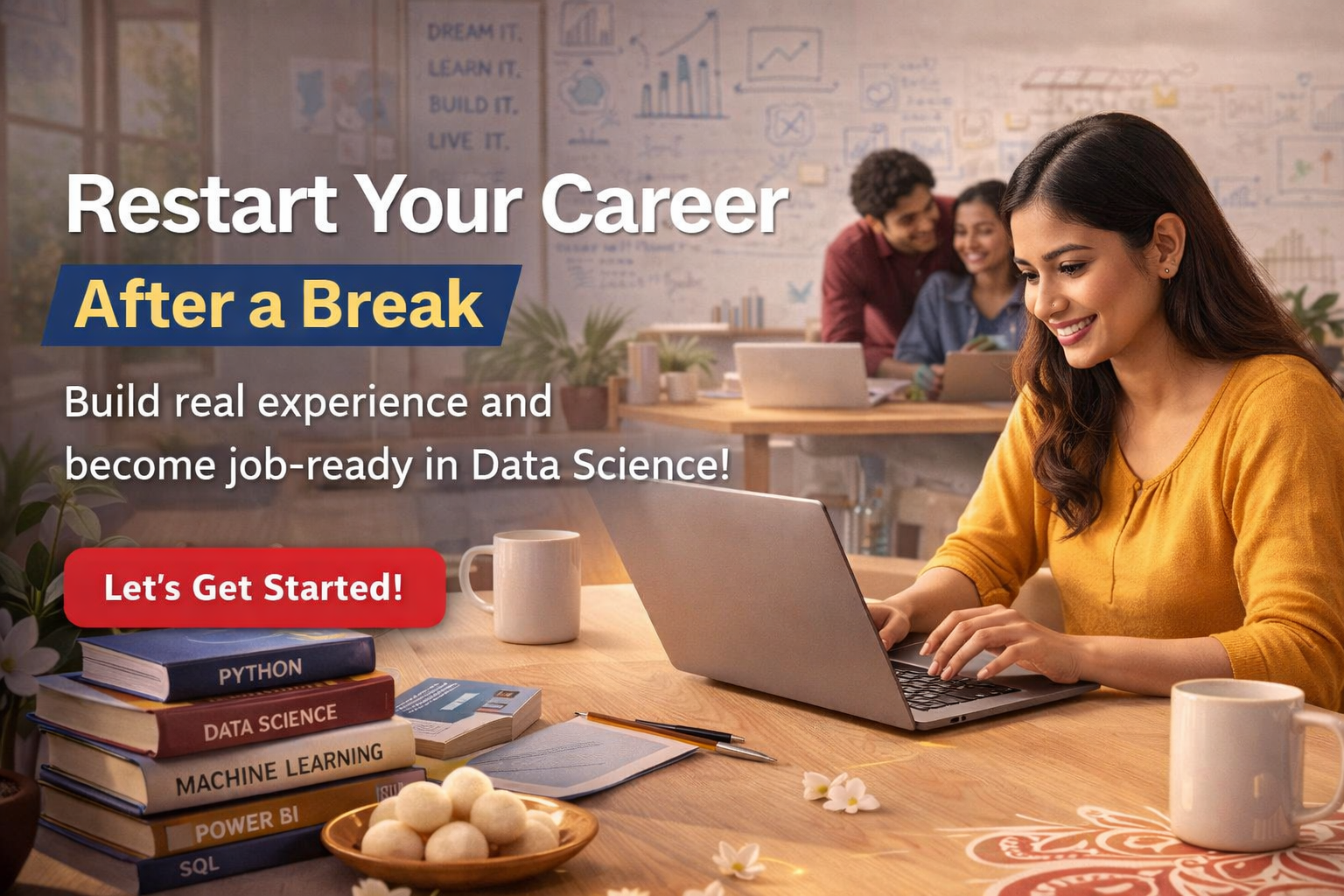
If you’re reading this, chances are you’ve taken a career break—and you’re wondering what comes next.
You might be asking yourself:
- How do I restart my career after a break?
- Will anyone even consider me after a career gap?
- Have I fallen too far behind—especially with all the talk around AI?
These are not shallow questions. They usually come from capable professionals who paused for real reasons—family, health, burnout, layoffs, or simply life—and are now trying to find their way back.
The good news is this: a career gap today is not what it was even five years ago. Hiring has changed. Careers have changed. And with the right approach, restarting your career does not mean starting from zero.
Looking for a Job After a Career Gap? You’re Not Alone
More professionals than ever are looking for a job after a career gap. Some stepped away to care for family. Some paused during the pandemic. Some took time to recover, reassess, or reskill.
What they all share is the same quiet fear: Will my gap count against me?
Here’s what we see consistently across hiring, analytics, and EdTech roles: Career gaps don’t disqualify people. Lack of readiness and clarity does.
The broader context also matters. According to the World Economic Forum’s Future of Jobs Report 2025, 44% of core job skills are expected to change within the next five years, and nearly 60% of the global workforce will need reskilling or upskilling by 2030.
This shift isn’t aimed only at people with career gaps. It affects everyone—including those who never stopped working. Which means a career break, when paired with relevant skills and real‑world application, is no longer a disadvantage. For many, it becomes a reset point.
“Can I Get a Job After a Career Gap?” — An Honest Answer
This is probably the most searched—and most emotional—question: Can I get a job after a career gap?
Yes. But not by doing what most people instinctively try first. Many professionals respond to a break by collecting courses and certificates. They stay busy, but they don’t always become more employable. This often comes from anxiety—especially around AI—and a fear that technology has “moved on” without them.
In reality, AI is not eliminating roles as much as it is changing how work gets done. Professionals who understand this shift tend to position themselves better. This perspective on how AI is transforming jobs rather than simply replacing them is especially relevant for returners.
What employers actually look for after a gap is simpler than it seems:
- Are your skills current?
- Can you apply them to real problems?
- Can you explain your break without defensiveness?
- Do you know what kind of role you’re aiming for now?
When those pieces are in place, the gap itself fades into the background.
Career Break: How to Get Back to Work Without Feeling Lost
If you’re trying to figure out how to get back to work after a career break, it helps to accept one uncomfortable truth:
There is no single “right” path back.
But there is a common wrong one—trying to figure everything out alone.
What tends to work better is structure:
- Clear direction on roles that make sense now
- Guided application of skills, not just learning
- Feedback from people who understand hiring realities
- Support in rebuilding professional confidence
Many capable professionals don’t struggle because they lack ability. They struggle because they lack activation.
Why Data Science and AI Are Relevant for Restarting a Career Today
For professionals restarting their careers, data science and AI are no longer niche or “advanced” fields. They are foundational capabilities used across industries.
Today, data and analytics drive decisions in Marketing and customer insights, Finance and risk management, Operations and supply chains, HR and people analytics, Strategy and consulting
This is why data‑led roles are particularly suitable for returners. They reward thinking over pedigree, context over credentials and application over timelines.
If you’re unsure where to begin, this guide on starting your artificial intelligence journey outlines a grounded, non‑intimidating way forward for professionals returning after a break.
It also helps to see how analytics is used beyond tech companies. This overview of how data analytics is applied across industries often helps returners recognize where their prior experience fits.
Data Science & AI After a Career Gap: Is It Actually Possible?
A question that comes up often is whether data science after a career gap is realistic.
It is. And in many cases, it’s a smart move.
Data and analytics roles are often more forgiving of non‑linear careers because:
- Skills matter more than timelines
- Projects matter more than titles
- Business understanding is a real advantage
Understanding what data science & AI really involves—beyond buzzwords—also helps professionals make better entry decisions.
Why Courses Alone Don’t Help You Restart Your Career
This is where many capable professionals get stuck. They do the work. They complete the courses. But interviews don’t convert.
The reason is straightforward: learning alone doesn’t equal employability.
Employers hire people who can:
- Apply skills in real situations
- Explain decisions and outcomes
- Show readiness for a specific role
This is why strategic upskilling, rather than accumulating certificates, is what actually gets noticed—especially in AI‑influenced roles.
What Is a Career Launcher Program, Really?
A career launcher program is designed to help professionals restart their careers after a gap—not just learn new skills. At its best, it combines:
- Training on the Job
- Role‑relevant skills in data science and AI
- Real‑world customer projects and not simulation
- Mentorship and feedback
- Documented work experience
The goal isn’t certificates. The goal is confidence, clarity, and employment.
A Final Thought
A career gap pauses employment—but it doesn’t erase experience, judgment, or potential. In today’s market, how you return matters far more than when you paused. So if you’re trying to restart your career after a break, don’t ask: “Which course should I do next?”
Ask instead: “What will help me feel—and present myself as—on-job professional again?”
That shift changes everything.